
15 Best Types of Dates: Flavor, Nutrition & How to Use Them
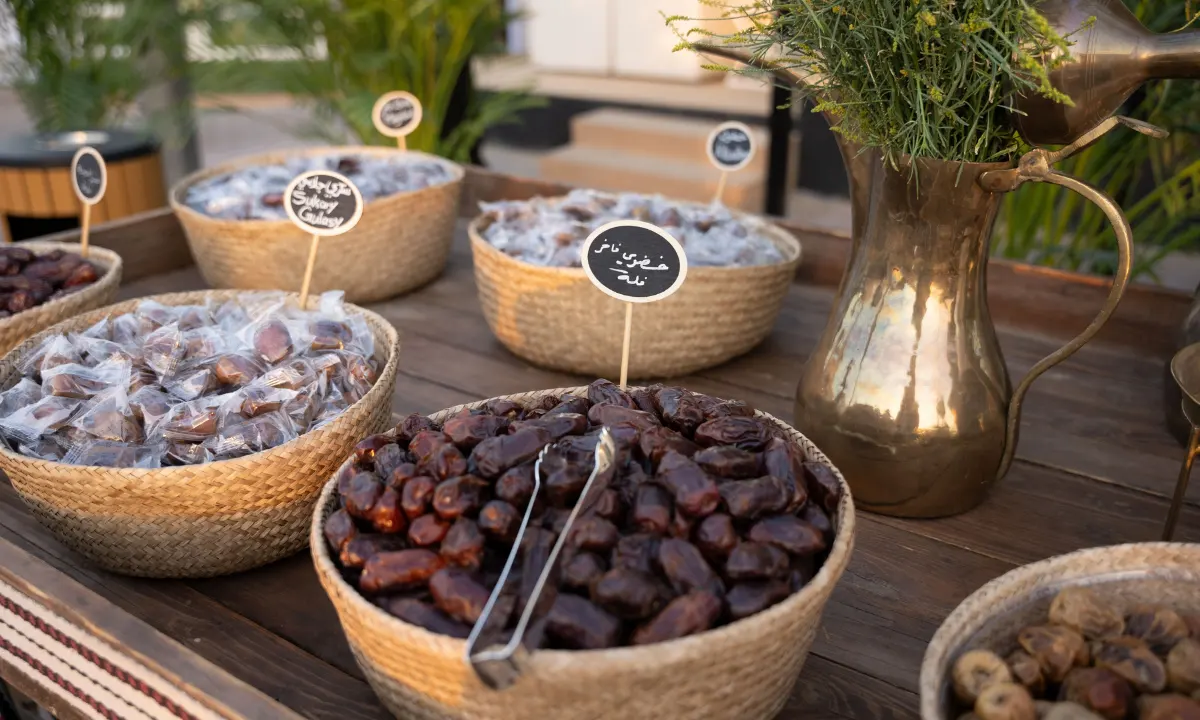
Choosing dates can be confusing because two varieties that look similar may taste completely different. One may be soft and caramel-like, another firm and nutty, while a fresh yellow date can turn soft and much sweeter as it ripens. The difference comes from the cultivar, moisture level, ripeness, growing region, and handling after harvest. Medjool, Ajwa, Sukkari, Deglet Noor, Barhi, Safawi, and Mabroom are some of the best-known types of dates, but there is no single “best” variety for every person. Medjool works well when you want a large, soft date for snacking or stuffing, Deglet Noor suits baking, Sukkari is a good choice for people who enjoy intense sweetness, and Barhi offers a distinctive fresh-date experience. This guide compares 15 popular date varieties by flavor, texture, sweetness, nutrition, and practical use so you can choose according to what you actually want from the fruit.
15 Types of Dates Compared
Date varieties differ in more than color and size. Moisture affects whether the flesh feels soft, chewy, or firm, while the cultivar and stage of ripeness influence sweetness and flavor. Some varieties are best eaten whole, while others are easier to chop, blend, stuff, or use in baking. The table below gives a practical comparison before we look at each variety in more detail.
Sweetness and texture can change with ripeness, crop conditions, storage, and individual batches. A soft date is also not automatically better than a firm one. The right choice depends on whether you want a moist snack, a cooking ingredient, a date for Arabic coffee, or a fruit that holds its shape during baking.
Why Do Different Types of Dates Taste and Feel Different?
Dates are the fruit of the date palm, Phoenix dactylifera, but individual cultivars develop different sizes, colors, sugar profiles, moisture levels, skins, and flesh textures. Climate, harvest timing, and post-harvest storage can change those characteristics further. This is why a large Medjool can feel soft and dense while a Deglet Noor feels firmer, even though both are dates. Ripeness matters as well. The same Barhi fruit can be yellow and crisp at one stage, then brown, soft, and sweeter later. Research also shows that date composition and phytochemical content can vary by cultivar, ripening stage, geographic origin, and processing conditions.
Soft, Semi-Dry and Dry Dates
Soft, semi-dry, and dry are useful ways to describe dates according to their moisture and resulting texture. Soft dates tend to contain more moisture and have tender, fleshy interiors. Medjool, Mazafati, and fully ripe Barhi commonly fit this eating style. Semi-dry dates are firmer and chewier, making varieties such as Deglet Noor, Zahidi, and Piarom useful for chopping, cooking, or eating whole. Dry dates, such as Thoory, contain less moisture and have a firmer bite. These categories should be treated as practical descriptions rather than exact rules because moisture can vary within the same cultivar depending on maturity and storage. Lower moisture usually makes a date easier to handle and less sticky, while higher moisture produces a softer eating experience. This is also why storage needs vary. A moist Mazafati date generally benefits more from cool storage than a naturally firmer, drier date.
Khalal, Rutab and Tamr: Date Ripening Stages
Moisture categories should not be confused with ripening stages. Khalal, Rutab, and Tamr describe how far the fruit has matured. At the Khalal stage, dates are mature but still relatively firm, often yellow or red, and high in moisture. Rutab begins as the fruit softens, darkens, and loses more water. Tamr is the fully ripe stage, when moisture has dropped further and the fruit has developed the concentrated sweetness and texture most people associate with packaged dates. FAO references describe Khalal dates as firm and crisp, Rutab as softened and succulent, and Tamr as fully ripe with substantially lower moisture. Barhi makes this difference easy to recognize. Yellow Barhi at the Khalal stage can be crisp and fresh, while ripe Barhi becomes soft, brown, and much richer in sweetness. The cultivar has not changed; its stage of ripeness has.
15 Popular Date Varieties and What Makes Each One Different
The easiest way to compare date varieties is to look at the same practical features each time: appearance, texture, sweetness, flavor, and best use. Origin is also useful, but dates are now cultivated outside many of their historic growing areas, so geographic descriptions should not always be read as exclusive origins.
1. Medjool Dates
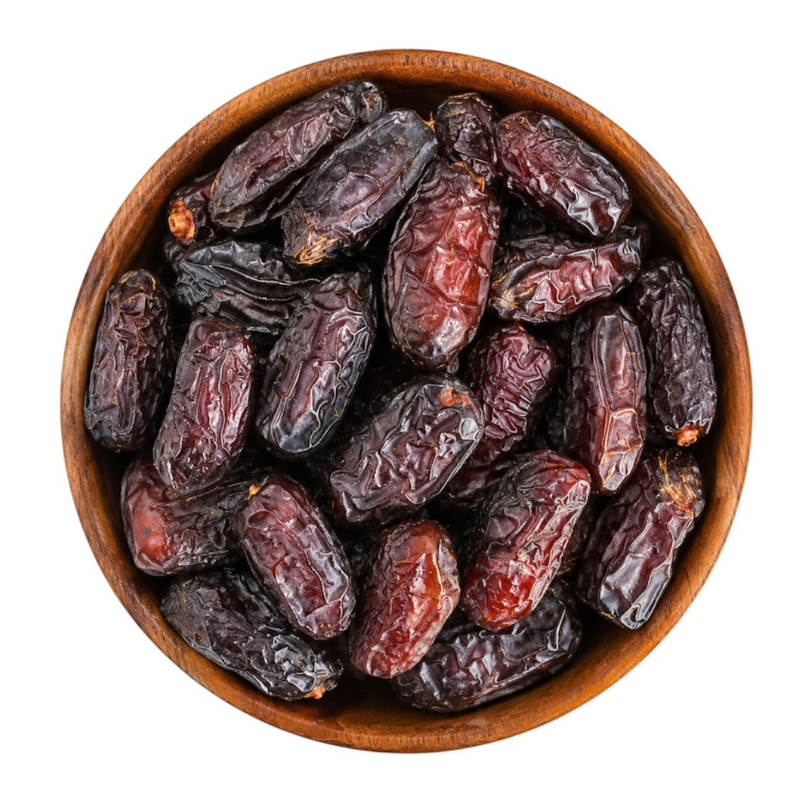
Medjool is one of the easiest varieties to recognize because of its size. The fruit is usually large and plump, with brown to deep mahogany skin and thick, soft flesh. Its texture is chewy rather than crisp, and its sweetness often carries caramel, honey, and dried-fruit notes. The large cavity left after removing the pit also makes Medjool especially practical for stuffing with almonds, walnuts, pistachios, nut butter, or soft cheese. Medjool works equally well as a whole snack and as an ingredient. Its soft flesh can be blended into smoothies, energy bites, sauces, or date paste. It is also useful where a recipe needs a sticky fruit that can help hold nuts, oats, or seeds together. New Day Naturals currently offers Mejdool dates in several pack sizes for UAE shoppers who prefer this large, soft style of date.
2. Deglet Noor Dates
Deglet Noor has a very different character from Medjool. It is usually medium-sized with amber to golden-brown skin and a firmer, semi-dry texture. Its sweetness is less intense, with delicate nutty or honey-like notes rather than a heavy caramel profile. That makes it useful for people who want dates in a recipe without allowing the fruit to dominate every other flavor. Its firmer flesh is easy to chop and distribute through cakes, breads, oatmeal, salads, grain dishes, and savory recipes. Deglet Noor is therefore one of the better choices for cooking and baking. It can still be eaten on its own, but its strongest advantage is versatility in recipes where a very soft date could become sticky or lose its structure.
3. Ajwa Dates
Ajwa is strongly associated with Al-Madinah in Saudi Arabia and carries deep cultural and religious importance for Muslims. The fruit is generally smaller than Medjool, dark brown to almost black, and marked by fine wrinkles. Its flesh is soft but can feel slightly drier and more fibrous than very moist varieties. The flavor is rich without being aggressively sweet, with dried-fruit, earthy, and prune-like notes. Ajwa is commonly eaten whole, served with coffee, given as a gift, or consumed during Ramadan. Its religious significance should be treated separately from nutrition claims; tradition and clinical nutrition are different kinds of evidence. New Day Naturals lists Ajwa dates sourced from Al-Madinah and offers them in several pack sizes for customers in the UAE.
4. Sukkari Dates
Sukkari, also written Sukkary or Sokari, is a Saudi variety known for pronounced sweetness. Its skin usually ranges from golden yellow to light brown, while the flesh can vary from soft and melting to firmer depending on the stage of maturity and the form sold. Honey and caramel are common flavor descriptions, which explains why Sukkari is often chosen by people who enjoy dessert-like dates. These dates pair well with unsweetened Arabic coffee because the bitterness of coffee balances their sweetness. They also work in desserts, snack plates, and fillings where a rich natural sweetness is wanted. Small crystals sometimes appear on sweeter dates as sugars move to the surface; this should be assessed carefully rather than automatically treated as spoilage.
5. Barhi Dates
Barhi is one of the most interesting types of dates because its eating experience changes greatly as it ripens. At the Khalal stage, the fruit is commonly yellow, small to medium in size, crisp, and firm. It can have a fresh sweetness that feels quite different from the dense character of fully ripe dates. As Barhi enters the Rutab stage, its skin darkens, its flesh softens, and its sweetness becomes richer. Ripe Barhi is often described with caramel, butterscotch, or syrup-like notes. The variety is a strong choice for anyone who wants to compare fresh dates with fully ripened fruit using the same cultivar. It is best enjoyed according to the texture you prefer: crisp at an earlier edible stage or soft and rich when more mature.
6. Mazafati Dates
Mazafati dates are closely associated with Bam in Iran, which is why the term “Bam dates” may appear in shops. They are also sometimes marketed as Kimia dates. The fruit is typically dark, glossy, fleshy, and much more moist than naturally dry varieties. Its soft interior gives it an almost melting texture when properly stored. Because Mazafati is tender and moist, it works particularly well as a fresh snack, chilled date, smoothie ingredient, or soft dessert component. It is less suitable for applications where a dry, firm fruit is needed to remain intact. Buyers who enjoy soft Medjool dates but want an even moister texture may find Mazafati appealing.
7. Safawi Dates
Safawi dates are associated with Saudi Arabia and are known for their dark appearance. They can range from deep mahogany to almost black and usually have a slightly wrinkled skin. The flesh is dense, soft, and chewy rather than watery, with a rich sweetness that can carry caramel, brown-sugar, or earthy notes. Their consistent chew makes Safawi suitable for everyday snacking, smoothies, date spreads, and some baked recipes. They also work well on Ramadan tables and gift trays. New Day Naturals currently carries Safawi Kalmi Dates, described as dark, fleshy, soft, and chewy, giving UAE customers another option between smaller Ajwa and larger Medjool styles.
8. Mabroom Dates
Mabroom stands out because of its long, slender shape and firmer bite. The skin is commonly reddish-brown to dark brown, while the flesh feels chewy rather than soft and sticky. Its sweetness tends to feel more controlled than very rich varieties such as Sukkari or soft Medjool. This makes Mabroom useful for people who want a clean snack that is easier to hold and less likely to feel sticky on the fingers. It pairs naturally with tea or Arabic coffee and also works well on premium serving plates. A milder taste should not be confused with a claim that Mabroom contains little sugar; perceived sweetness and measured carbohydrate content are separate things.
9. Khalas Dates
Khalas, also written Kholas, has strong relevance across the Gulf and UAE. It is commonly recognized by golden-brown skin, a smooth appearance, soft flesh, and a balanced caramel or toffee-like flavor. Compared with intensely sweet dates, Khalas can feel rich without becoming overpowering. One of its best-known uses is pairing with Arabic coffee, or gahwa. The mildly sweet fruit works well against the bitter and aromatic character of the coffee, which helps explain its place in Gulf hospitality. UAE food coverage has also highlighted Kholas as a popular variety served with gahwa.
10. Khudri Dates
Khudri, sometimes written Khidri, is usually dark reddish-brown with a chewy texture and moderate to rich sweetness. Its flavor is often described through dried-fruit notes such as raisin, followed by a deeper caramel character. The fruit can vary in size, but larger examples provide enough flesh for filling with nuts. Khudri is a practical everyday date because it sits between very soft and very dry styles. It can be eaten plain, paired with nuts, served with coffee, or included on mixed date platters. Its firmness also gives it enough structure for stuffing without making it as dry as Thoory.
11. Zahidi Dates
Zahidi, also known as Zahedi, is a firmer, semi-dry date usually recognized by its golden to light-brown color. Its taste is relatively mild, sometimes with nutty or buttery notes, making it useful for people who find highly sweet dates too rich. Its lower moisture and firmer flesh give Zahidi an advantage in cooking and processing. It can be chopped for baking and is also associated with products such as date sugar and date powder. The important distinction is that Zahidi may taste less sweet, but that does not automatically make it a low-sugar food. Nutritional comparisons need measured data rather than taste alone.
12. Piarom Dates
Piarom is an Iranian variety often placed in the premium category because of its appearance and texture. The fruit is generally elongated, dark brown to nearly black, with relatively thin skin that sits closely against the flesh. It is semi-dry rather than very moist, giving it a firm and pleasantly chewy bite. Its flavor commonly brings together caramel and toffee-like notes without the extreme softness of Mazafati. That combination makes Piarom well suited to direct snacking, premium serving, gifting, and stuffing with nuts. It is a good option for someone who wants rich flavor but prefers a more structured texture.
13. Segai Dates
Segai, also written Sagai, is easy to distinguish from many date varieties because of its two-tone appearance and contrasting texture. A single fruit can have a firmer, lighter section and a darker, softer portion, creating two slightly different bites within the same date. The flavor is usually sweet but balanced, with brown-sugar or caramel-like notes. Segai is often used on hospitality trays or premium date platters because its appearance adds variety alongside darker dates such as Ajwa and Safawi. It is also suitable for fillings such as pistachios or almonds.
14. Thoory Dates
Thoory, or Thuri, is sometimes called a bread date because its firm, dry texture makes it useful in baked foods. It is usually golden-brown to brown, with lower moisture than soft dates and a mild, slightly nutty taste. The fruit is firm and relatively non-sticky, so it handles differently from Medjool or Mazafati. Those qualities make Thoory suitable for chopping into bread, baked dishes, cereals, or trail-style snacks. Its lower moisture can also make storage easier than very soft fruit. Dry texture should still be treated as a characteristic of the variety and maturity rather than a sign that the fruit is nutritionally superior.
15. Lulu Dates
Lulu is particularly relevant to UAE readers. It is generally round to oval, dark brown, and known for a balanced sweetness that falls between very sweet and mild varieties. Fresh examples can have a pleasantly juicy texture, making Lulu a good table date rather than simply an ingredient for processing. UAE food coverage describes Lulu as a sought-after local variety with a rounded shape, dark-brown color, and sweetness that sits between richer Khalas and milder Fardh. The UAE also has a much wider date culture than a list of 15 varieties suggests; in July 2026, the country's Ministry of Climate Change and Environment said the UAE is home to around 150 date varieties, with Khalas, Barhi, Sukkari, Fard, and several others among the best known.
Are Different Date Varieties Nutritionally Different?
All dates share a broadly similar nutritional pattern: they are carbohydrate-rich fruits containing natural sugars, dietary fiber, minerals, and plant compounds. Exact values, however, should not be copied from one variety and presented as if they apply identically to every date. Cultivar, ripeness, moisture, geography, and processing can change both nutrient concentration and phytochemical content. Recent scientific reviews also stress that date composition varies considerably between cultivars and stages of maturity.
Natural Sugars and Carbohydrates
Most of the energy in dates comes from carbohydrates, including naturally occurring glucose and fructose, with sucrose levels varying among cultivars and ripening stages. As dates lose moisture during ripening, their sweetness can become more concentrated. That is why a fully ripe Tamr date often tastes much sweeter than the same fruit at an earlier stage. These sugars make dates useful as a sweet ingredient in smoothies, oatmeal, desserts, and snack recipes, but “natural” does not mean sugar-free. Portion size still matters, particularly for people who need to monitor carbohydrate intake.
Dietary Fiber
Dates also provide dietary fiber. As one reference point, USDA-linked nutrient data for Medjool dates lists about 6.7 grams of fiber per 100 grams, although values can differ between varieties and products. Fiber adds structure to the fruit and contributes to normal digestive function, which is one reason whole dates behave differently nutritionally from syrups or highly processed sweeteners. Using whole dates in a snack also means eating their fiber along with their natural sugars. The amount consumed still matters, so it is better to view dates as a nutrient-containing sweet fruit rather than an unlimited substitute for every form of sugar.
Potassium, Magnesium and Other Minerals
Dates can contribute minerals such as potassium, magnesium, copper, and manganese. Medjool nutrient data, for example, lists potassium and magnesium along with smaller amounts of calcium, phosphorus, iron, zinc, and other minerals. Exact mineral levels differ by cultivar and serving size, so variety-specific claims should use measured data whenever possible. This is especially important for product descriptions. A date should not be advertised as a treatment for anemia, blood pressure problems, or another medical condition simply because it contains iron or potassium. Food composition and medical treatment are different matters.
Polyphenols and Other Antioxidant Compounds
Dates contain a range of plant compounds, including polyphenols, phenolic acids, flavonoids, and carotenoids. A systematic review found that ripe date fruits contain phenolic compounds that contribute to their antioxidant activity, while newer research notes that concentrations can vary substantially by cultivar, maturity, storage, and processing. These findings support describing dates as a source of antioxidant compounds. They do not justify claiming that a particular date cures disease or guarantees protection from a health condition. Keeping that distinction clear makes nutritional information more useful and trustworthy.
How to Use Different Types of Dates
The best date for a recipe depends mainly on texture and sweetness. Soft dates blend easily, firmer dates are easier to chop, larger dates provide more room for stuffing, and very sweet varieties can dominate delicate recipes. Instead of treating every cultivar as interchangeable, match the fruit to the job.
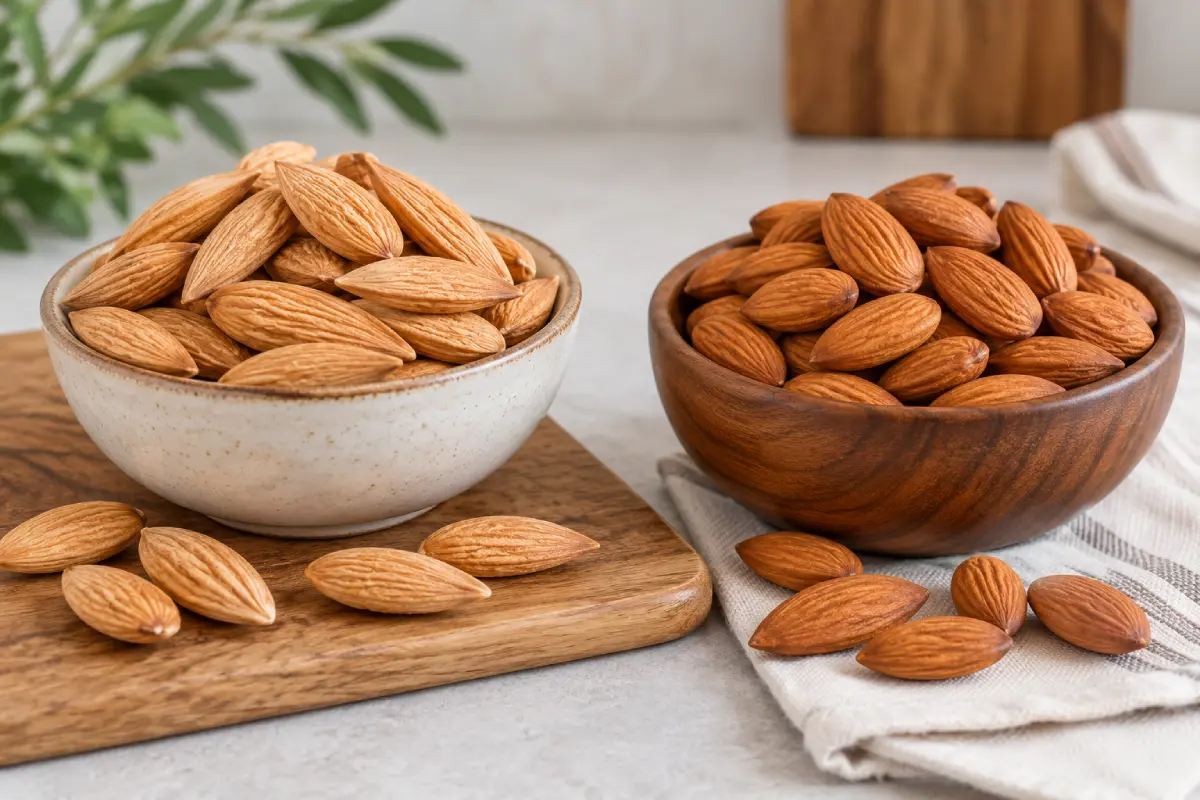
For stuffed dates, nuts such as almonds, pistachios, pecans, and walnuts create texture without hiding the flavor of the fruit. Soft cheese or tahini can add contrast to sweeter varieties. In baking, firmer dates are easier to distribute evenly through dough or batter, while soft Medjool can be mashed where a sticky binder is useful.
Dates as Ingredients and Natural Sweeteners
Dates can also be processed into date paste, date syrup or dibs, date powder, and date sugar. Each behaves differently in food. Date paste retains more of the whole fruit's body and fiber, while syrup is liquid and can change the moisture of a recipe. Date sugar or powder is dry, but it does not dissolve exactly like refined white sugar. For that reason, there is no universal rule that every date product can replace white sugar at a 1:1 ratio in every recipe. Cakes, sauces, drinks, and baked foods respond differently to changes in moisture and texture. Choosing the right date product gives a better result than treating all date-based sweeteners as identical.
How to Choose and Store Good Quality Dates
Good-quality dates should match the natural characteristics of their variety. A soft Mazafati should feel different from a dry Thoory, and a wrinkled skin is not automatically a defect. Quality is better judged by appropriate color, texture, aroma, cleanliness, and the absence of clear spoilage. Storage should also match moisture level because soft dates generally require more care than drier ones.
What Good Quality Dates Should Look and Feel Like
Start by checking whether the fruit looks typical for its cultivar. Medjool should generally appear plump and fleshy, Ajwa small and dark, Khalas golden-brown, and Segai visibly two-toned. Natural wrinkles are common as dates lose moisture, so perfectly smooth skin is not a requirement. The fruit should feel consistent with its type. Soft dates should have tender flesh without feeling wet or fermented, while semi-dry and dry varieties should have a firmer bite. Avoid fruit with obvious pest damage, unusual fuzzy growth, strong sour smells, or signs that the package has been exposed to excess moisture.
Sugar Crystals vs Mold: How to Tell the Difference
A pale coating on a date is not always mold. Natural sugars can migrate to the surface and crystallize, especially during storage, producing dry, grainy, or crystalline patches. This can affect appearance and texture without necessarily meaning the fruit has spoiled. Mold is different. Fuzzy growth, an unusual odor, wet decomposition, unexpected discoloration, or fermentation are reasons to avoid eating the fruit. If the appearance is uncertain and spoilage cannot be confidently ruled out, the safest choice is to discard it.
How Long Do Dates Last and Where Should You Store Them?
There is no single shelf-life number that applies to every date. Higher-moisture fruit is generally more perishable, while fully ripe Tamr-stage dates contain less water and are more storage-stable. FAO references note that moisture falls substantially as dates move from Khalal through Rutab to Tamr, which helps explain why fully ripe dates keep longer. Keep dates in a clean, airtight container away from heat and direct sunlight. Refrigeration is useful for preserving the texture and freshness of soft or moist varieties, especially in the UAE climate. Longer storage may also be possible through freezing, depending on the product. For packaged dates, the producer's storage instructions and best-before information should take priority over a generic online estimate.
Dates in UAE Food Culture and Hospitality
Dates have a practical and cultural place in the UAE that goes far beyond being a sweet snack. They are closely linked with date-palm agriculture, Arabic coffee, Ramadan, Iftar, hospitality, gifts, and family gatherings. Varieties such as Khalas, Barhi, Sukkari, Lulu, Fard, and others form part of a much broader local date tradition. UAE authorities reported in 2026 that around 150 date varieties are found in the country, showing how much diversity exists beyond internationally famous names such as Medjool. For serving guests, the choice can be based on balance. Khalas works naturally with gahwa, Sukkari suits someone who likes stronger sweetness, Segai adds visual contrast to a platter, while Ajwa carries particular cultural and religious meaning. Nuts such as pistachios and almonds can also turn larger dates into filled snacks for gatherings or gifts. For UAE shoppers who want to compare these textures directly, New Day Naturals have date products including Ajwa, Mejdool, and Safawi Kalmi, alongside its wider range of natural foods. We based in Dubai and states that it focuses on careful sourcing, hygienic handling, storage, and delivery.
Frequently Asked Questions About Types of Dates
How many varieties of dates are there?
There are far more date cultivars than the varieties commonly found on supermarket shelves. Counts vary because sources may include local cultivars, commercial varieties, synonyms, and regional names differently. The UAE alone reported around 150 varieties in 2026, so it is better to say that hundreds to thousands of named cultivars exist globally rather than claim one exact universal number.
Which type of date is the sweetest?
Sukkari is widely known for very pronounced sweetness and is a strong choice for anyone who wants a honey or caramel-like date. Fully ripe Barhi and soft Medjool can also taste very sweet. Actual sugar concentration can vary with cultivar, maturity, and moisture, so “sweetest” is partly a sensory judgment.
Which dates are less sweet?
Deglet Noor, Zahidi, and some Mabroom dates tend to taste milder than Sukkari or soft Medjool. A less sweet taste does not automatically mean the fruit contains very little sugar, so people monitoring carbohydrate intake should rely on nutrition information and serving size rather than taste alone.
Which dates are softest?
Mazafati is known for a very moist, soft texture, while fully ripe Barhi can become exceptionally tender. Medjool is also soft and chewy but usually feels denser than very moist Mazafati. Storage and freshness can change softness even within the same variety.
What is the difference between Medjool and Ajwa dates?
Medjool dates are usually much larger, softer, and more intensely caramel-like. Ajwa dates are smaller, very dark, and tend to have a milder, fruitier, slightly earthy flavor. Ajwa is closely associated with Al-Madinah and Islamic tradition, while Medjool is widely used for snacking, stuffing, smoothies, and desserts.
Can you eat dates every day?
Dates can form part of a balanced diet and provide carbohydrates, fiber, minerals, and plant compounds. They are also naturally high in sugars, so the appropriate amount depends on the rest of a person's diet, serving size, and individual nutritional needs.
Do dates need to be refrigerated?
They do not all require identical storage. Moist and soft dates generally benefit more from refrigeration, particularly for longer storage or in hot climates. Drier varieties can be more stable, but an airtight container, protection from heat, and the storage instructions on the package remain important.
Are dates fresh fruit or dried fruit?
Dates can be sold at different stages of maturity. Many familiar brown dates are harvested at the fully ripe Tamr stage, where much of their water has naturally been lost during ripening. They may therefore look and behave like dried fruit even when they have not gone through the same artificial drying process used for some other fruits. Earlier Khalal and Rutab dates contain more moisture and are more perishable.
Which Date Variety Should You Try First?
The best date depends on what you enjoy and how you plan to use it. Choose Medjool for a large, soft date with rich caramel sweetness; Ajwa for a smaller, darker fruit with strong Madinah association; Sukkari for pronounced sweetness; Barhi for the contrast between crisp fresh fruit and soft ripe fruit; Deglet Noor for baking and cooking; Khalas for Arabic coffee; Mazafati for a very moist texture; or Mabroom for a firmer, less-sticky chew. There is no need to treat one variety as the winner in every category. The real value comes from matching flavor, texture, and moisture to your preference.
Recent Posts