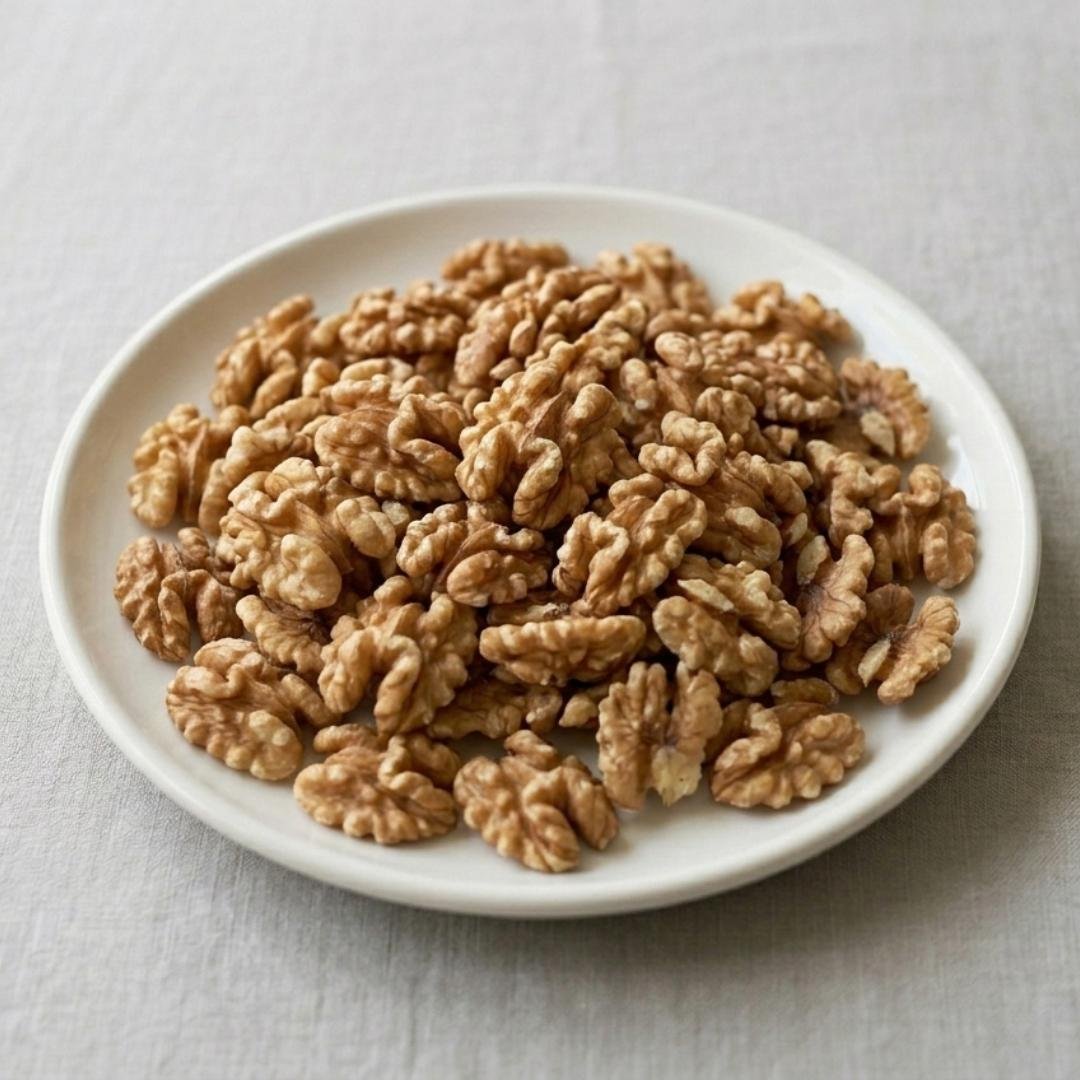
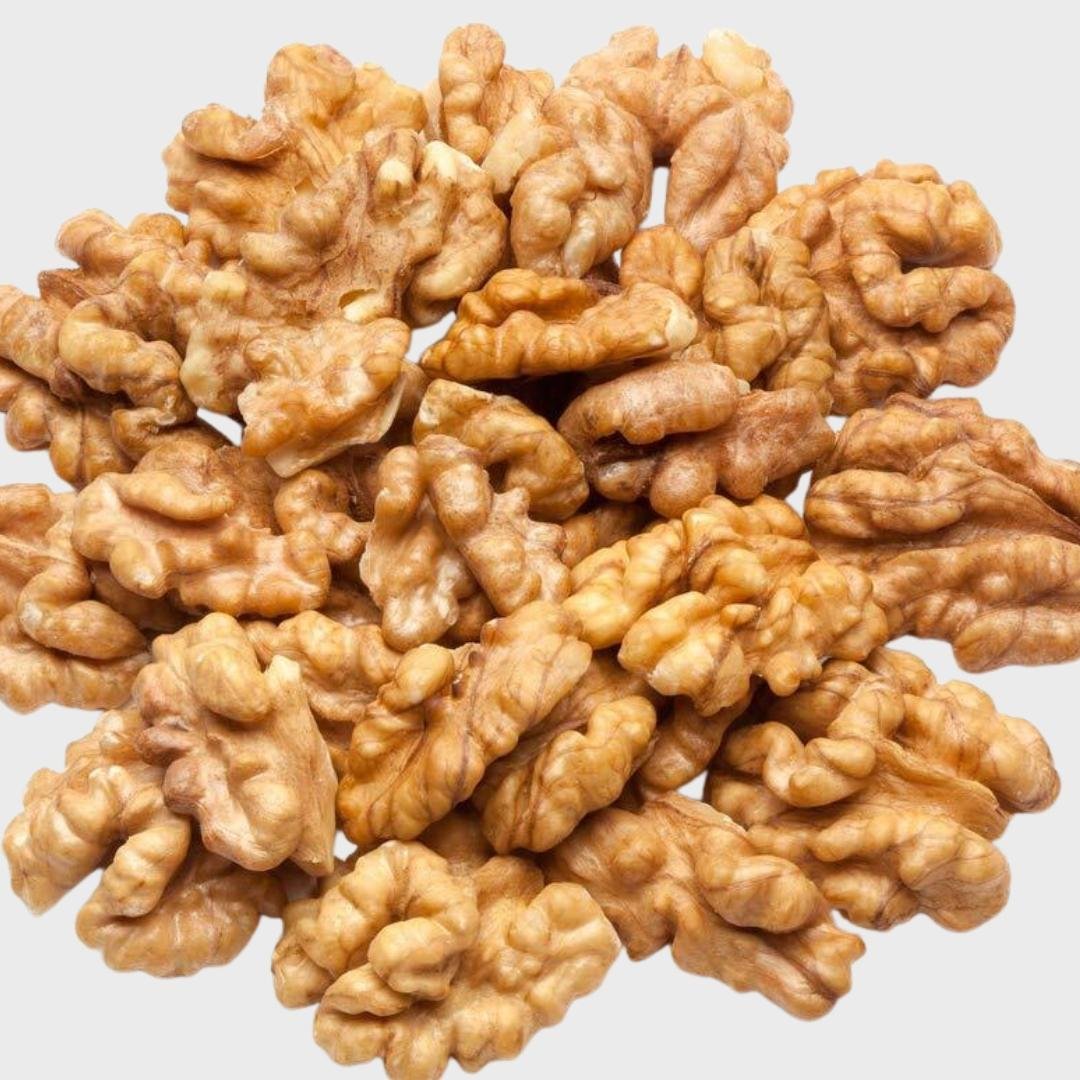
The Walnut is often hailed as the "brain food" of the plant kingdom—not just because its wrinkled kernel remarkably resembles the human brain, but because it is scientifically packed with neuroprotective compounds.
Originally native to the ancient Persian Empire, walnuts are among the oldest tree foods known to humanity, dating back as far as 7,000 B.C. Unlike most other nuts that are defined by their crunch and monounsaturated fats, the walnut stands out for its soft, buttery texture and its status as a premier plant-based source of Omega-3 fatty acids. Whether enjoyed raw, toasted, or pressed into a rich finishing oil, the walnut remains a cornerstone of both gourmet Mediterranean cuisine and modern nutritional science.
Characteristics of Walnut
Walnuts stand out in the pantry for several specific reasons:
- Shape: They are iconic for their bi-lobed structure that resembles the human brain.
- Texture: They have a softer, more "waxy" crunch compared to the hard snap of an almond.
- Flavor: Walnuts have a rich, earthy, and slightly tangy flavor, often with a hint of bitterness in the skin (which is where most of the antioxidants live!).
- Oil Content: They are incredibly oil-rich, making them prone to rancidity if not stored in a cool, dark place.
Benefits
If almonds are for the heart, walnuts are for the head and the gut:
- Omega-3 Powerhouse: They are one of the few plant sources significantly high in Alpha-linolenic acid (ALA), an essential Omega-3 fatty acid.
- Brain Function: Research suggests the nutrients in walnuts (polyunsaturated fats, polyphenols, and Vitamin E) help reduce oxidative stress and inflammation in the brain.
- Gut Health: Studies show that eating walnuts can promote a diverse and healthy gut microbiome.
- Anti-Inflammatory: Their high concentration of polyphenols helps fight the inflammation linked to many chronic diseases.
Uses of Walnut
Walnuts add a deep, savory complexity to both sweet and salty dishes:
- Baking: The classic choice for brownies, banana bread, and carrot cakes.
- Salads: They pair perfectly with bitter greens (like arugula), apples, and goat cheese.
- Meat Substitute: When pulsed in a food processor with mushrooms or lentils, they create a texture very similar to ground meat for vegan tacos or "neat-balls."
- Walnut Oil: A finishing oil that is too delicate for high-heat cooking but incredible drizzled over pasta or grilled vegetables.
- Pesto: A popular alternative to pine nuts in traditional basil pesto.
Why Walnut Jumbo is a Favorite Choice
Much like the almond, the Jumbo Walnut is the "Extra-Large" grade that enthusiasts seek out for specific reasons:
- Whole Halves: Lower-grade walnuts often come as "pieces" or "crumbs." Jumbo walnuts are selected for their ability to stay in perfect whole halves, which is essential for decorating cakes or gourmet cheese boards.
- Easier Shelling: If you are buying them in the shell, Jumbo varieties are much easier to crack open without shattering the nut meat inside.
- Milder Bitterness: Larger, well-matured kernels often have a higher oil-to-skin ratio, which can result in a creamier taste with less of the astringent "bite" found in smaller nuts.