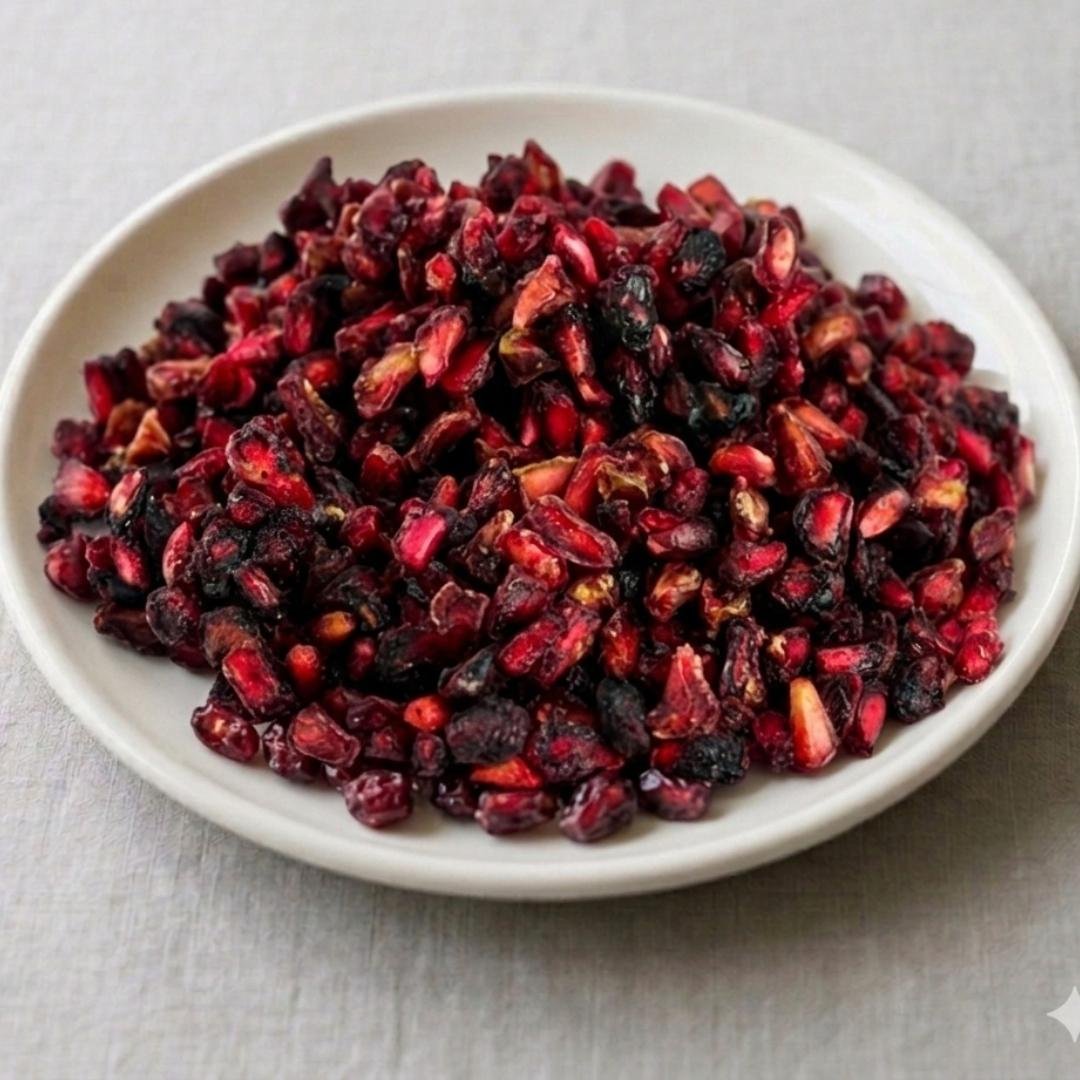
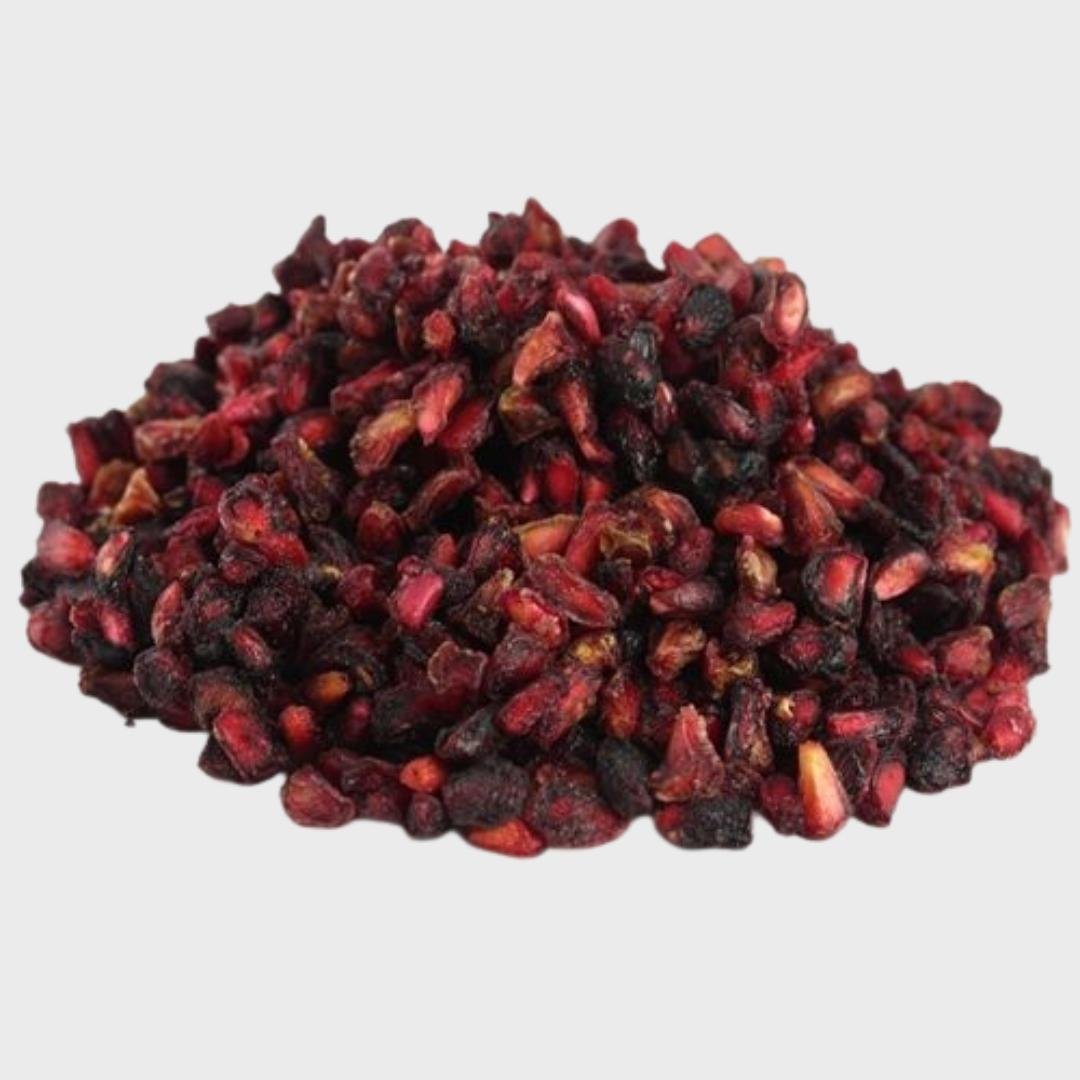
Anardana is made by drying the arils (the seed-bearing pulp) of wild, tart pomegranate varieties. The drying process causes the sugars to concentrate and the natural acids—primarily citric acid—to intensify. Unlike fresh pomegranate, which is sweet-tart, Anardana is savory, sour, and intensely concentrated.
Characteristics
- Appearance: Dark, brownish-red, shriveled, and hard. They look like small, gem-like pebbles.
- Texture: Chewy, tough, and crunchy. Because the seed (the hard inner part) remains intact, they provide a distinct, satisfying "pop" or crunch in every bite.
- Flavor Profile: A sharp, fruity sourness similar to tamarind or sumac, but with a unique, earthy, and deep-red fruit undertone.
- Potency: Extremely high. A tablespoon of Anardana can provide the same souring power as a cup of lemon juice.
Benefits
Anardana is highly valued in traditional medicine for its digestive properties:
- Digestive Stimulant: The high organic acid content stimulates the production of digestive juices, making it excellent for heavy, fatty, or rich meals.
- Anti-Inflammatory: Rich in polyphenols and tannins that help fight systemic inflammation.
- Rich in Iron & Antioxidants: Supports healthy blood circulation and protects against cellular damage.
- Appetite Regulator: Its sour profile helps satisfy cravings and cleanses the palate, making it a great addition to detox-focused diets.
Culinary Uses
Anardana is not meant to be eaten by the handful; it is a culinary seasoning used to transform the character of a dish:
- The Ultimate Souring Agent: Used in North Indian and Pakistani cuisine to give Chana Masala (chickpea curry) its characteristic tang and dark color.
- Spice Mixes: When toasted and ground, it creates a vibrant, sour powder that can be used exactly like Sumac on salads, hummus, or grilled vegetables.
- Chutneys: An essential ingredient in tangy green chutneys (pudina-anardana chutney), providing a depth of flavor that lime juice just can't match.
- Stuffed Parathas/Breads: Often crushed and added to potato or vegetable stuffings for dough, giving a surprising, zesty "burst" when you bite into the bread.
- Meat Marinades: Added to slow-cooked meat dishes to tenderize the proteins while adding a complex, fruity acidity.
Why "Premium Grade" Anardana Matters
When shopping for Anardana, the difference between "cooking-grade" and "premium" is significant:
- The "Cleanliness" Factor: Lower-grade Anardana is often dried in the open and can contain grit, dust, or sand. Premium Anardana is washed, sorted, and dried in clean environments.
- Seed Hardness: Premium Anardana is harvested from wild pomegranates, which are significantly more tart than the large, sweet supermarket varieties. This ensures you get that authentic "sour kick."
- Color: Look for deep, dark ruby or maroon tones. If the seeds look pale or dusty, they may be old or poorly dried.
- Uniformity: Good quality Anardana is uniform in size, which ensures that it hydrates and softens evenly when added to a gravy.
Pro-Tip for Usage
To get the best out of your Anardana, lightly dry-roast the seeds in a pan for 1–2 minutes before crushing them in a mortar and pestle. This releases the essential oils trapped in the seeds, making the flavor much more intense and aromatic.